Novigrad, Zadar County
Historic Croatian village with Venetian and Ottoman past.

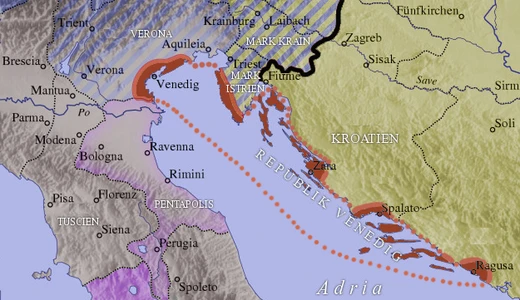
Novigrad is a village and municipality in Croatia’s Zadar County. In 1386, the Hungarian and Croatian ruler Mary and her mother, Elizabeth of Bosnia, were held captive there. Elizabeth was killed in Novigrad the following year—though the exact method of her death is disputed among historical sources—while Mary was later freed. The settlement came under Venetian control in 1409, and during the Cretan War (1646–1647) it was briefly occupied by the Ottomans.
The local climate, recorded since 1981, reached a high of 40.4 °C on 22 July 2017 and a low of −10.0 °C on 9 January 1987. As of the 2011 census, the municipality had 2,375 residents, the vast majority Croats. By 2021, the population was 2,160, spread across the settlements of Novigrad (481), Paljuv (333), and Pridraga (1,346).
The historic town sits on the southern shore of the Novigrad sea, a bay rich in fish and shellfish, supporting a well-known local fishing tradition. Its Mediterranean architecture and partial fortifications remain intact. The nearby Zrmanja River offers opportunities for canoeing, kayaking, and rafting. Within the old center, Vlatković (Kontin’s) palace is a protected cultural complex, located above the Great Gate along the eastern rampart. The yard includes residential and commercial buildings, a water cistern, and terraced gardens. The complex was expanded several times between the 17th and 19th centuries.
- country
- Croatia
- county
- Zadar County
- population_2011
- 2375
- population_2021
- 2160
- highest_temperature
- 40.4 °C (22 July 2017)
- lowest_temperature
- -10.0 °C (9 January 1987)
Lore & Background
In 1386, the Hungarian and Croatian sovereign Mary and her mother, Elizabeth of Bosnia, were imprisoned in Novigrad. Elizabeth was killed there in 1387—though historical sources vary on the method, with some claiming strangulation and others suggesting she was thrown into a pit—but Mary was liberated. The settlement became part of the Republic of Venice in 1409. Venetian rule was briefly interrupted by Ottoman occupation between 1646 and 1647 during the Cretan War.
Reader's Guide
Novigrad's significance lies in its layered history as a site of royal imprisonment and a frontier between Venetian and Ottoman powers. The 1386–1387 events involving Queen Mary and Elizabeth of Bosnia mark a dramatic episode in Croatian and Hungarian medieval politics. The later Venetian and brief Ottoman periods shaped its fortifications and architecture. Today, the municipality preserves Mediterranean architecture and a system of fortification, while the Novigrad sea supports a local fishing tradition. The Zrmanja River offers canoe, kayak, and rafting excursions. Vlatković (Kontin's) palace, a cultural heritage complex extended from the 17th to the 19th century, reflects classicist style from its 1813 reconstruction. The demographic shift from 2,375 (2011) to 2,160 (2021) residents indicates a modest decline, with the largest settlement being Pridraga (1,346 inhabitants).
Did You Know?
- The highest recorded temperature in Novigrad since 1981 was 40.4 °C on 22 July 2017.
- Elizabeth of Bosnia was killed in Novigrad in 1387, though the exact method of her death is disputed among historians.
- Ottoman occupation of Novigrad lasted from 1646 to 1647 during the Cretan War.
- The Vlatković palace complex was expanded several times between the 17th and 19th centuries.
More in Territories of the Republic of Venice 1-24
Spotted an error? Know more?
This is a living reference — every entry is fact-audited, and reader corrections feed straight into our audit queue. Suggest an edit · See this site's audit record