Alleghe
Alpine village shaped by a 1771 landslide and known for tourism.

Alleghe, also known in Ladin as Àlie, is a village and comune located within the province of Belluno, in the Italian region of Veneto. Its western boundary is marked by Lake Alleghe, a body of water created in 1771 when a landslide came down from the nearby Mont Piz.
Regarding the name, some language purists trace Alleghe to the Latin *alica* or *alicarius*, meaning “granary.” However, since no grain grows in this Alpine settlement, a more likely origin is a contraction of the Ladin phrase *a l'agua*, referring to the deep mountain valley that once defined the village’s western edge before the 1771 landslide. A community has existed on this site since at least the 12th century CE.
Tourism drives Alleghe’s economy. Popular activities include mountain climbing and skiing. The tallest peak, Monte Civetta (Ladin: Zuita), rises to 3,220 metres (10,560 ft) and is a well-known climbing destination. In winter, the lake attracts ice skaters and ice hockey players. Other landmarks include I misteri di Alleghe, Lago di Alleghe, and the Stazione meteorologica di Caprile.
In sports, Alleghe is home to HC Alleghe, an ice hockey team that has historically competed in Italy's top-tier Serie A, though it has also spent periods inactive or in lower divisions. The team's home games are played at Stadio del ghiaccio Alvise De Toni.
- ice_hockey_team
- HC Alleghe (historically Serie A, with periods in lower divisions)
Lore & Background
Alleghe's name is disputed: purists derive it from Latin alica or alicarius meaning 'granary', but since no grain grows in this Alpine village, it is more likely a contraction of the Ladin a l'agua, referring to the deep mountain valley that marked the western boundary before the 1771 landslide. A community existed as far back as the 12th century CE.
The landslide of 1771 from Mont Piz created Lake Alleghe to the west, which now serves as a popular destination for ice skaters and ice hockey players in winter. The village's tallest peak, Monte Civetta (Ladin: Zuita), rises to 3,220 metres and is a noted climbing spot.
Alleghe is home to HC Alleghe, an ice hockey team that has historically competed in Italy's top-tier Serie A, though it has also spent periods inactive or in lower divisions. The team plays at Stadio del ghiaccio Alvise De Toni.
Reader's Guide
Alleghe's significance lies in its unique geography and cultural history. The 1771 landslide that formed Lake Alleghe dramatically reshaped the landscape and created a natural landmark that now defines the village's identity. The name itself reflects this history, with the Ladin origin a l'agua pointing to the valley that existed before the event. As a tourist destination, Alleghe offers mountain climbing on Monte Civetta and skiing, while its lake attracts winter sports enthusiasts. The presence of HC Alleghe, a professional ice hockey team that achieved a surprise Alpine League victory in 1992/1993, adds a sporting dimension to the community. The village's long history, dating to the 12th century, and its linguistic heritage (Ladin alongside Italian) contribute to its cultural depth. Landmarks such as I misteri di Alleghe, Lago di Alleghe, and Stazione meteorologica di Caprile further mark its character. Alleghe exemplifies how a natural disaster can create lasting economic and recreational opportunities.
Did You Know?
- Lake Alleghe was formed in 1771 by a landslide from Mont Piz.
- The name Alleghe likely comes from the Ladin a l'agua, meaning 'at the water'.
- Alleghe's tallest peak, Monte Civetta, rises to 3,220 metres (10,560 ft).
The Valley That Became a Lake
Alleghe sits in the province of Belluno, in Italy's Veneto region, and its very landscape was reshaped by a single catastrophic event. In 1771, a massive landslide tore away from the slopes of Mont Piz to the west, swallowing the deep mountain valley that had long served as the village's western boundary. That valley, once a dramatic gorge, was buried under rock and debris, and the water that pooled in its place gave birth to Lake Alleghe. The transformation was so total that it redefined the settlement's identity. The Ladin name for the place, Àlie, and the likely Italian contraction a l'agua, meaning toward the water, both point to this watery, valley-bound character. What had been a landlocked Alpine hamlet with a dramatic gorge on one side became a lakeside community almost overnight. The community itself is ancient, with records stretching back to the 12th century, meaning the villagers of that era would have known a completely different topography than their descendants do today.
A Name Carved in Ladin
The name Alleghe carries a quiet argument about who really belongs in this Alpine corner of Veneto. Italian linguistic purists have long pointed to the Latin words alica or alicarius, meaning granary, as the root of the village's name. But that etymology rings hollow in a high-altitude settlement where no grain has ever been cultivated. The far more convincing origin is the Ladin phrase a l'agua, a simple contraction meaning toward the water, a direct reference to the deep mountain valley that bordered the village on its western side before the 1771 landslide buried it. The Ladin name Àlie, still in use locally, reinforces the community's deep-rooted position within the Ladin-speaking world rather than the Italian one. This linguistic duality is not merely academic; it reflects a village whose identity was shaped by geography, water, and mountain isolation long before it was absorbed into the administrative framework of Belluno province. The 12th-century community that first settled here would have spoken Ladin, and that heritage persists in the very syllables of the place name.
Peaks, Ice, and the Alpine Economy
Tourism is the economic backbone of Alleghe, and the village's offerings are as dramatic as its geography. The crown jewel for climbers is Monte Civetta, known in Ladin as Zuita, which soars to 3,220 metres and is a noted climbing destination. Skiing rounds out the winter sports portfolio, making the area a year-round destination for outdoor enthusiasts. But the lake itself, born from that 1771 catastrophe, becomes a winter playground of a different kind: its frozen surface hosts ice skaters and ice hockey players who glide across the same water that once was a valley. Beyond the peaks and the ice, Alleghe preserves a handful of landmarks that anchor its cultural memory. I misteri di Alleghe, the Lago di Alleghe itself, and the Stazione meteorologica di Caprile each serve as touchstones for visitors seeking to understand the village's layered history. Together, these elements create a tourism economy that is inseparable from the very geological and climatic forces that shaped the settlement.
The Surprise Kings of Alpine Ice Hockey
In a small Alpine comune nestled beneath Monte Civetta, a professional ice hockey team has punched far above its weight. HC Alleghe competes in Italy's top division, serie B, a remarkable achievement for a squad based in a remote village in the Belluno province. Their most celebrated moment came in the 1992/1993 season, when they stunned the hockey world by winning the Alpine League as genuine underdogs. The team plays its home games at the Stadio del ghiaccio Alvise De Toni, a venue that embodies the village's deep connection to ice and winter sport. The lake that dominates Alleghe's western horizon doubles as a natural rink in colder months, hosting skaters and hockey players who take to the frozen surface. For the residents, the team is more than a sporting club; it is a symbol of what a small, high-altitude community can achieve when it channels its mountain grit into competitive sport. The 1993 Alpine League title remains the story told with the most pride in the village.
Frequently Asked Questions
What is Alleghe and where is it located?
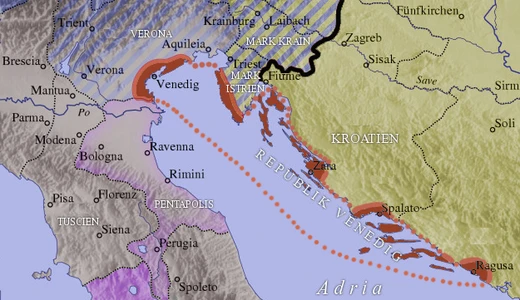
Alleghe (Ladin: Àlie) is a small Alpine comune in the province of Belluno, Veneto, that historically formed part of the Venetian Republic's mainland holdings in the Dolomites. The community has been continuously inhabited since at least the 12th century, perched in a high valley between the peaks of the Civetta massif.
How did Lake Alleghe come to exist?
In 1771 a catastrophic landslide broke away from the slopes of Mont Piz and blocked the valley floor, damming the water and creating the lake that now defines the village's western boundary. The event permanently reshaped the local landscape and remains the defining geological feature of the area.
What is the true origin of the name 'Alleghe'?
Although a minority of etymologists link it to the Latin word for a granary, that reading makes little sense in a grain-free Alpine setting. The more widely accepted derivation is a contraction of the Ladin phrase meaning 'to the water,' a reference to the deep valley that once ran along the settlement's western edge before the 1771 landslide altered the terrain.
What drives Alleghe's economy today?
Tourism is the primary industry, attracting visitors for hiking, mountaineering on Monte Civetta (3,220 m), and the scenic lake-and-peak panorama. The village leverages its dramatic Alpine setting as its central draw rather than any large-scale industrial base.
Does Alleghe field a competitive sports team?
Yes—HC Alleghe plays in Italy's Serie B ice-hockey league, a remarkable accomplishment for a community of this size and altitude. The team is a point of local pride and a regular topic of conversation among residents and visiting fans alike.
More in Territories of the Republic of Venice 1-24
Spotted an error? Know more?
This is a living reference — every entry is fact-audited, and reader corrections feed straight into our audit queue. Suggest an edit · See this site's audit record